How to Tell If a Book Is a First Edition
A plain guide to telling whether a book is a true first edition. How to read the copyright page, the number line, and the dust jacket, and why a first edition is not always worth money.
Robin Swain
Author
A stack of antique hardcover books, one open to the title page.
You found an old book. Maybe it came from an estate, a yard sale, or a box in the attic. Now you want to know one thing: is it a first edition, and does that mean it is worth something?
Here is the honest version. A first edition is the first print run of a book from its first publisher. Telling whether you have one comes down to a few specific marks printed inside the book, mostly on the copyright page. You do not need to be an expert to check. You need to know where to look.
This guide walks through the marks that matter, in the order a bookseller checks them.
The short answer
To tell if a book is a first edition:
- Open to the copyright page, usually the back of the title page.
- Look for the words "First Edition," "First Printing," or "First Published."
- Find the number line, a row of numbers like 1 2 3 4 5 6 7 8 9. If it includes a 1, it usually means a first printing.
- Check that the copyright date matches the original publication year.
- Confirm the dust jacket is the original, since on collectible books the jacket carries much of the value.
The catch is that publishers do not all use the same system, and some contradict each other. The rest of this guide covers the exceptions.
Step 1: Find the copyright page
The copyright page is where a book states its own history. It sits on the reverse of the title page in almost every book printed in the last century.
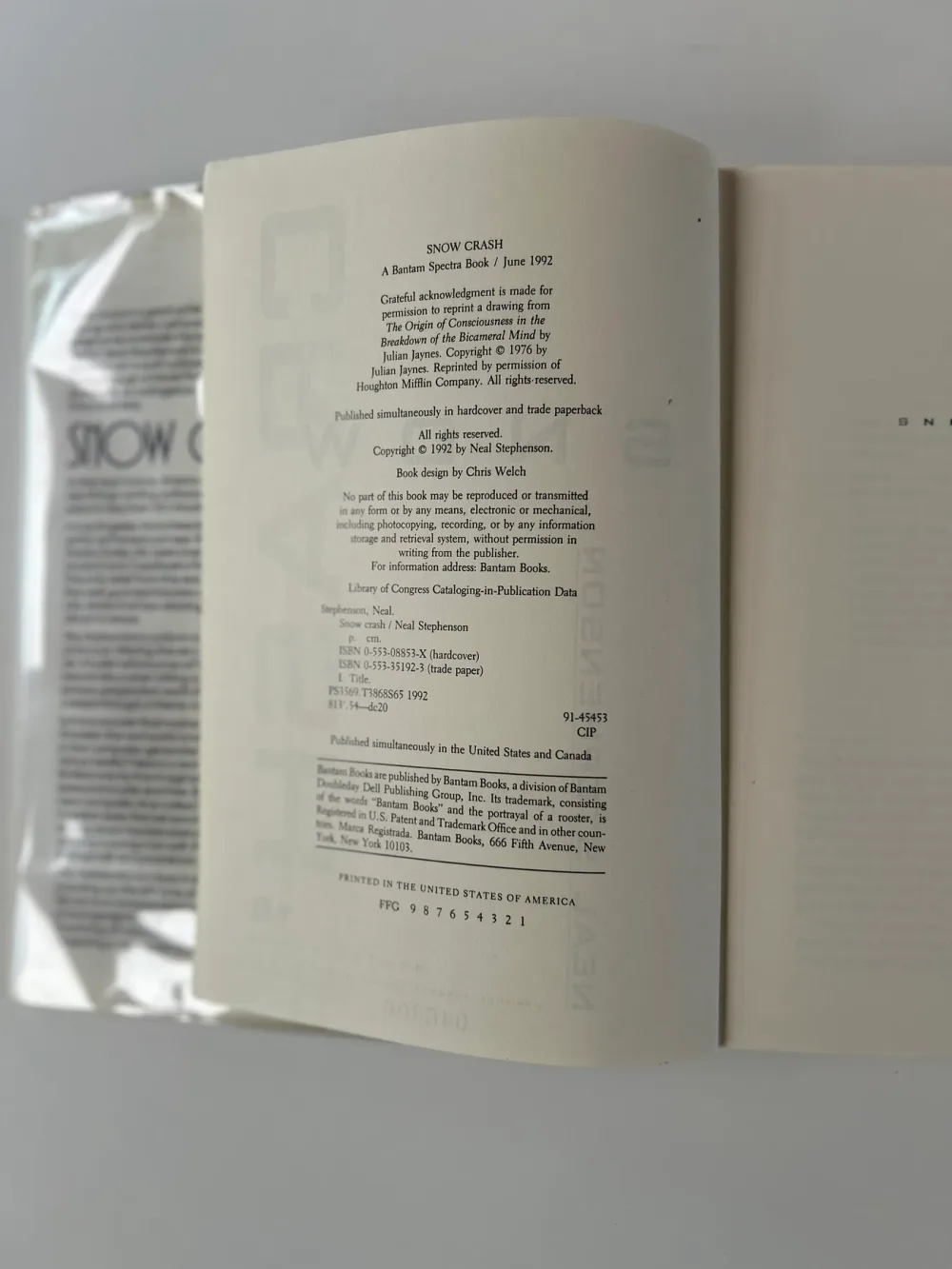
Read it slowly. You are looking for three things: a printed edition statement, a number line, and a copyright year. Each one tells you part of the story, and you cross-check them against each other.
Step 2: Read the number line
The number line, also called the printer's key, is a row of numbers near the bottom of the copyright page. It records which printing you are holding.
The rule most publishers follow: the lowest number shown is the printing. So a line that reads 2 3 4 5 6 7 8 9 is a second printing. A line that still includes a 1 is a first printing.
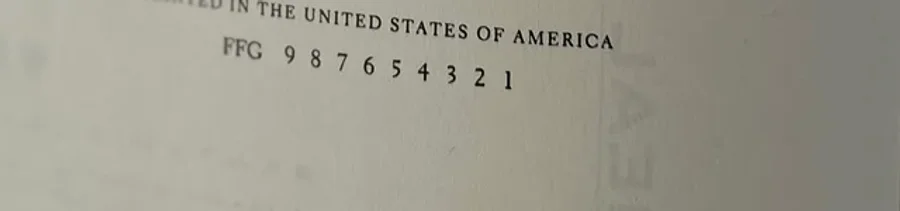
Lines run in different directions and some interleave the numbers (10 9 8 7 6 5 4 3 2 1, or 2 4 6 8 9 7 5 3 1). The direction does not matter. What matters is whether a 1 is present.
Step 3: Look for a stated edition
Some publishers make it easy and print the words outright: "First Edition," "First Printing," or "First Impression."
Trust this, but verify it against the number line, because here is a common trap. A book can say "First Edition" and still show a number line that starts at 2 or higher. When the words and the number line disagree, the number line wins. The publisher printed "First Edition" as a fixed line on the plate and only updated the number line on later printings. What you have is a later printing of the first edition, which is usually worth far less than a true first printing.
Step 4: Know your publisher's quirks
There is no universal standard. Publishers have used their own systems, and those systems changed over the decades. A few well-known examples:
- Random House historically marked a first printing with the words "First Edition" plus a number line ending in 2 rather than 1. Later printings kept the 2 but dropped the words, so the words are what settle it.
- Some British publishers list the print history as a string of years.
- Book club editions often copy the look of a first edition but are a separate, low-value printing. A blind stamp or dot on the back cover, and the absence of a price on the jacket, are common tells.
If the marks are ambiguous, the publisher and year give you enough to look up the specific identification points for that title.
Step 5: Check the dust jacket
On a collectible hardcover, the dust jacket is not packaging. It is most of the value.
The same first edition can be worth many times more with its original jacket than without. A first edition of The Maltese Falcon in its original 1930 dust jacket can sell for six figures at auction. The same novel without that jacket is worth a small fraction of the price. The book is identical. The jacket makes the difference.
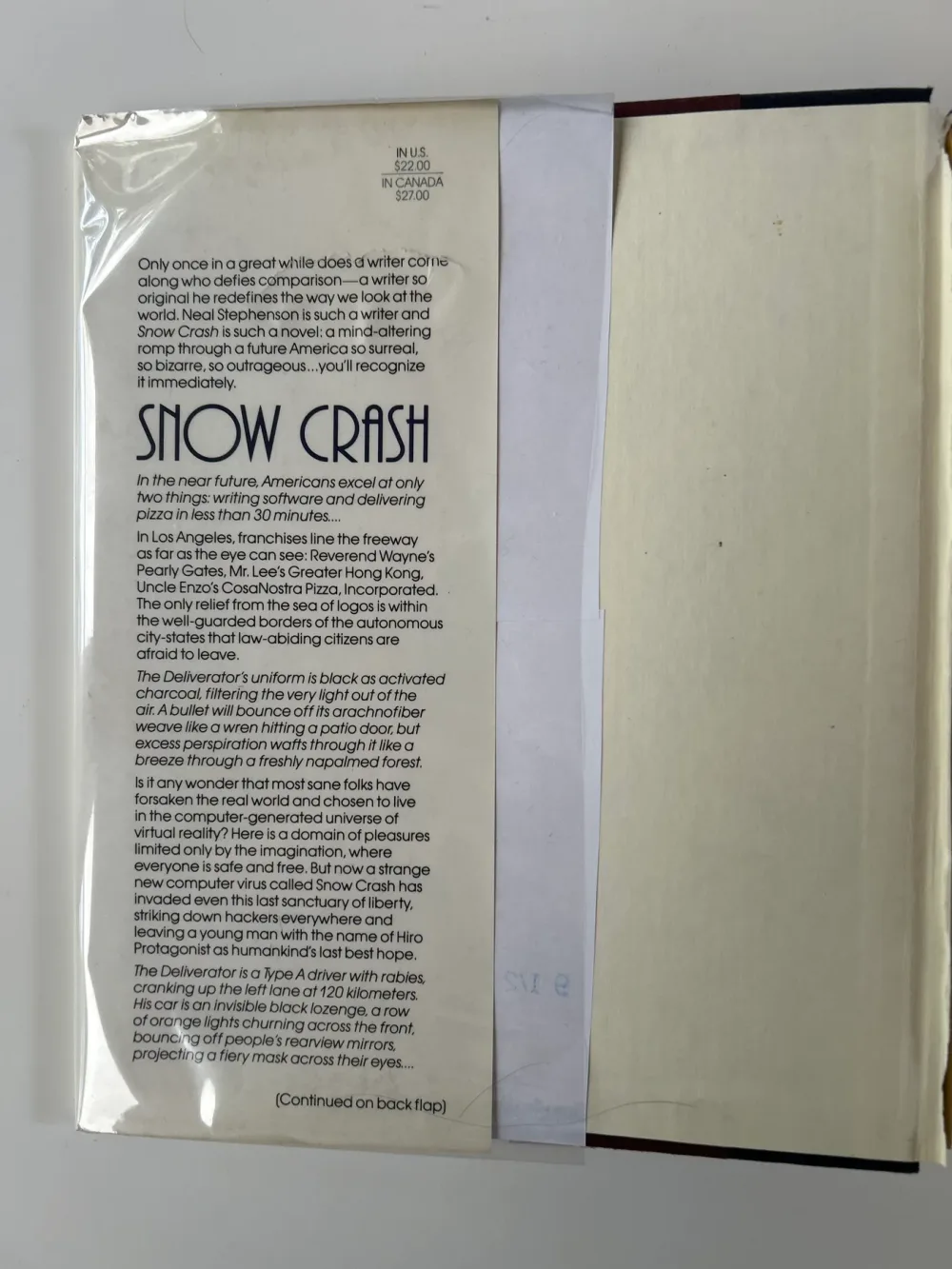
Check that the jacket is original to the book and not a later reproduction, and that the printed price in the corner of the flap has not been clipped off. A clipped price often signals the book was given as a gift, and collectors pay more for an unclipped jacket.
A first edition is not always worth money
This is the part most guides skip, and it is the one that saves you disappointment.
A first edition only has value if collectors want that particular book. Millions of first editions are worth a few dollars because the print run was large and demand is low. Value comes from three things working together: rarity, demand, and condition. A first edition of a famous book in poor condition can be worth less than a later printing of a rare one in fine condition.
So "is it a first edition" and "is it worth money" are two different questions. The marks above answer the first. The second depends on the specific title, its condition grade, and what the market is paying right now.
The faster way to check
Reading number lines and publisher quirks works, but it is slow when you have a stack of books or an unfamiliar title.
FirstFolio is an AI tool that identifies and values old books from photos, and it does exactly this. You upload pictures of the cover, title page, and copyright page, and it identifies the edition and printing, grades the condition, and gives an estimated market value range in about 60 seconds. It reads the same marks a bookseller reads, including the number line and jacket details, and tells you what the book is and roughly what it is worth.
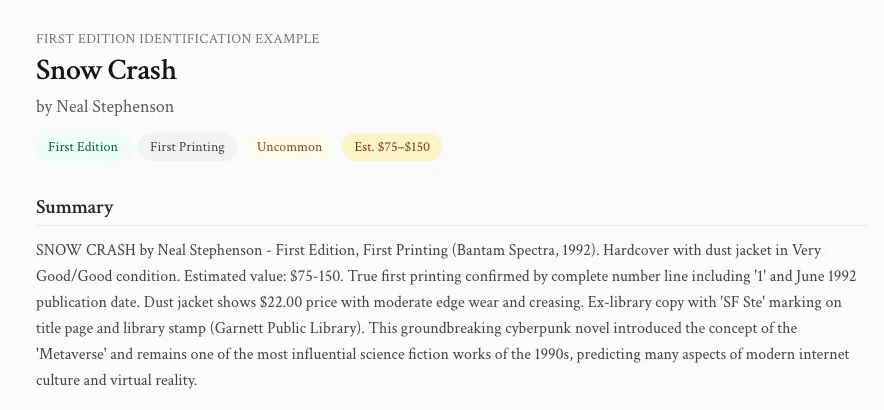
You can check two books free, no card required. Identify your book in 60 seconds.
Frequently asked questions
Does "First Edition" printed in a book guarantee it is a first printing? No. If the number line starts at 2 or higher, you have a later printing of the first edition, even when the words "First Edition" appear. The number line is the deciding mark.
Where is the number line in a book? Near the bottom of the copyright page, which is on the reverse of the title page. It is a row of numbers such as 1 2 3 4 5 6 7 8 9.
Is a first edition always valuable? No. Value depends on rarity, demand, and condition together. Many first editions are common and worth little. A first printing of a sought-after title in fine condition with its original dust jacket is where the value lives.
Does the dust jacket really matter that much? Yes. On collectible hardcovers the original jacket can account for the large majority of the value. An unclipped, original jacket is worth far more than a missing or reproduced one.
Can I identify a first edition from photos? Yes. The marks that matter are visible on the cover, title page, and copyright page. FirstFolio reads them from photos and returns the edition, condition, and estimated value.
Related reading: